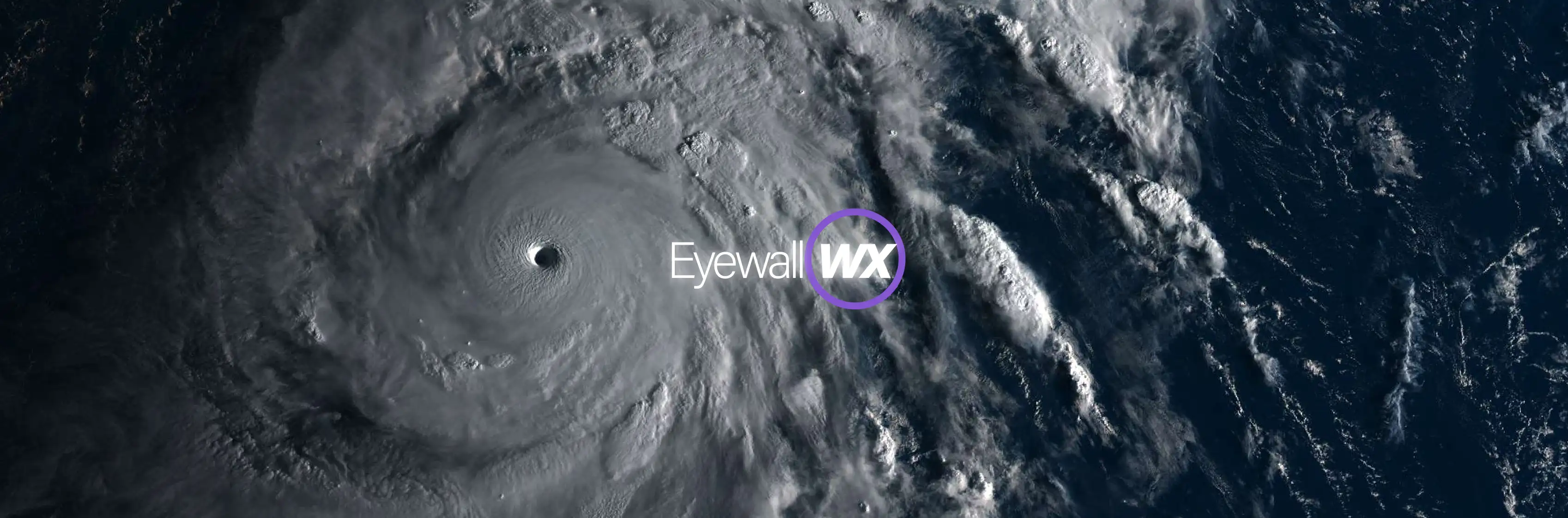


Origins And Formation
Octave originated from a decently organized tropical wave that emerged off the coast of southwestern Mexico. The predecessor to the hurricane, named invest 98E, traversed the open waters of the far east EPAC, until it began coalescing farther into TD 15, and 6 hours later gaining the moniker ‘Octave’ as per NHC.
 |  |
|---|
Originally, models were quite bullish with Octave. Some of the NWP outputs were going well into major status for the storm - they were the exceptions from the model mean, but showed that the potential was there for a decent over-the-sea storm.
The track of Octave was quite uncertain beyond the 120 hour mark, mainly due to the influence of future Priscilla and Raymond, which ended up causing Octave to recurve back towards Mexico.
 |  |
|---|
Intensification
Octave steadily intensified soon after getting named as a small tropical storm, however northeasterly wind shear and mediocre sea surface temperatures kept it in check. It would remain in this state for about 2 more days following October 2nd.
Noteworthy was that despite its small size and rough environment, Octave exhibited quite incredible outflow, with a noticeable up-shear element to it. The storm was attempting to sustain itself, even against the poor environmental condition
 |  |  |
|---|
Despite its messy appearance, early on the 4th of October, microwave imagery revealed that ‘under the hood’ something was brewing - curved banding became evident, which is usually a first step towards building a core.
Also at this time, it became evident just how poorly models were performing with this tropical cyclone. The HAFS-A model trend changed from forecasting a category 3 major hurricane, to a mere 35 knot tropical storm. In the end, neither of these scenarios occurred, with a more moderate outcome for Octave.
 |  |
|---|
Octave would begin its run at category 1 status late on the 4th, as more concentrated bursts would begin firing around its core. This soon would translate into more focused banding, with hints of a nascent eye appearing on visible imagery.
Around this time, Octave also exhibited a well organized core on microwave imagery, evident of an intensification trend. Even though it was much better than before, the core still exhibited some structural issues, especially its openness to the south - possibly due to dry air.
Despite its best attempts, Octave would briefly hiccup before its peak as possible dry air entrainment would cause convection to wane and its structure to degrade. Luckily for Octave, this did not last for long, as the vortex quickly reorganized itself.
 |  |
|---|---|
 |  |
Peak Intensity
After its moderate hiccup, the hurricane would peak on the 5th of October as a medium category 1 storm with sustained winds of 75 knots. At its peak, the storm exhibited quite solid curved banding, alongside a well developed nascent eye, possibly indicating a higher intensity than the actual peak.
Quite striking in basin wide imagery was just how small Octave was compared to its bigger sister, hurricane Priscilla farther east.
To support that theory, a SAR pass at the hurricane’s peak showed that it might have exhibited winds as high as 100 knots. SAR is not an extremely reliable tool, however it fares quite well with low end storm, hinting at a higher peak.
 |  |  |
|---|---|---|
 |  |  |
Weakening
Octave’s peak did not last long however as unusual late-season steering currents began leading it towards the east. As this shift occurred, an average sized and weak Octave would enter Hurricane Priscilla’s sphere of influence, which lead it to become severely sheared from the east due to its bigger sister’s outflow.
On top of that, the storm was battered by dry shear and cool sea surface temperatures, however the vortex would prove itself to be resilient in the face of such environmental adversities.
 |  |  |
|---|
Soon, Octave was no more than 700km away from Priscilla’s center, and thus was stripped of all of its convective activity. A naked swirl was all that remained of the storm’s center, and yet against all odds - it would keep attempting to fire deep moist convection.
 |  |
|---|
Absorption by 17E/Raymond
The former hurricane would keep drifting eastward towards the Mexican coast, eventually finding itself in-between a weakening Priscilla and a forming Raymond on October 9th.. Shear was high enough that convection stopped firing, and what remained of Octave was a low level swirl.
 |  |  |
|---|
The last traces of Octave would disappear in the swirling mass of convection now known as Tropical Storm Raymond.
 |
|---|
No extras section this time around, as this is a fairly short article. Thanks for reading!